 English
 English (United Kingdom)
 Nederlands
 Nederlands (België)
 Deutsch
 français
 čeština
 polski
 español
 română
 dansk
dansk
 svenska
 magyar
 Türkçe
 slovenčina
 русский
 norsk
norsk
Limes are excellent urban trees with high biodiversity value, and they are also very climate resilient. They are therefore widely used in built-up areas, but lime aphid, which occurs on many Tilia species, can cause problems. The sticky honeydew excreted by the aphids causes nuisance when it lands on parked cars or street furniture. Fortunately, there are also a number of lime species that are resistant to aphids.
The best drip-free limes
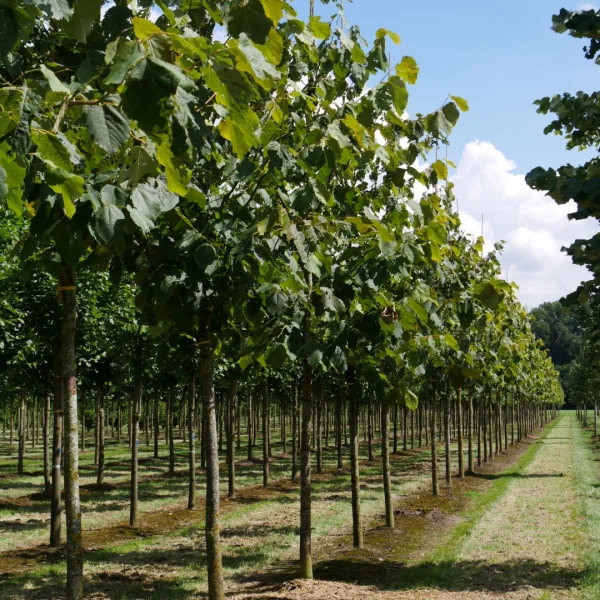
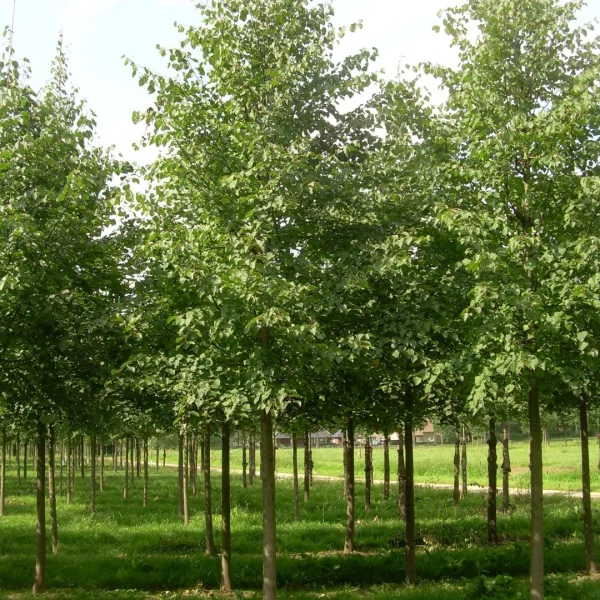
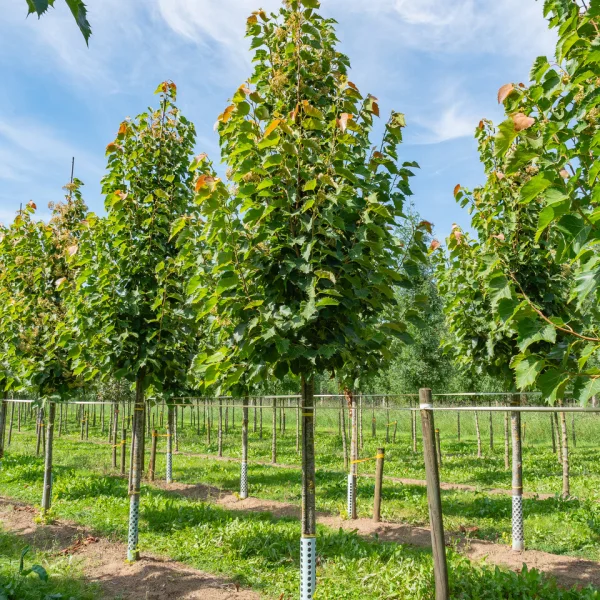
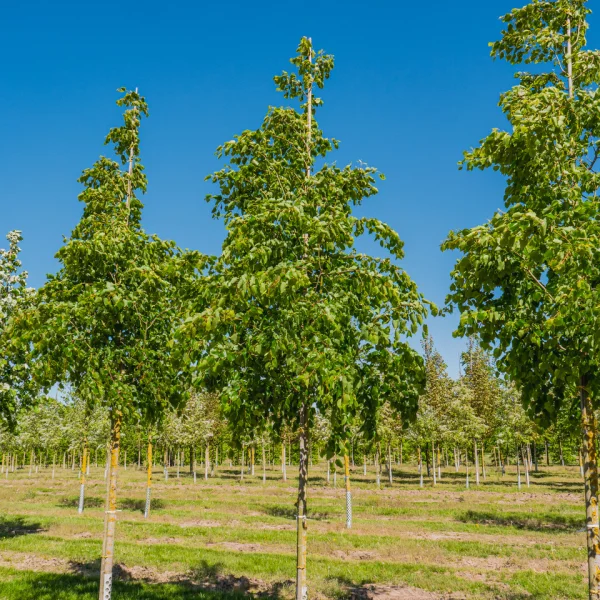
Good species selection is the best guarantee against nuisance from aphids and the formation of sooty mould. Specifically for public realm designers, we have brought together our experience with different Tilia species and compiled a list of species that are, in most conditions, not susceptible to aphids.
What problems does aphid infestation cause?
Aphids overwinter on the twigs and around the buds. In spring, the female aphids are born and, especially during alternating dry and wet periods, the population can increase very rapidly. The aphids feed on sap from the leaves. They excrete excess moisture (honeydew), which creates a sticky substance that makes the tree and everything directly beneath it tacky. This sticky substance is also the breeding ground for sooty mould. The sooty mould forms a layer on the leaf, blocking sunlight. As a result, long-term growth is reduced and the leaf will die off.
Can aphid attack be prevented?
It may happen that reasonably resistant species are still affected by aphids. This is almost always down to growing conditions, because if a tree is in a poor site, it will always be susceptible to diseases and pests. In the fight against aphids, it is therefore important to give limes good growing conditions. Tilia needs an airy soil, not too wet, and good sun exposure.